cotalks.dev
Orgs
Login
JupyterCon in New York 2018
Channel:
O'Reilly
Videos (68)
1 — Jupyter's configuration system
2 — Disease Prediction Using the World's Largest Clinical Lab Dataset - Cristian Capdevila (Prognos)
3 — Beyond Interactive: Scaling Impact with Notebooks at Netflix - Michelle Ufford (Netflix)
4 — Sustaining Wonder: Jupyter and the Knowledge Commons - Carol Willing (Cal Poly San Luis Obispo)
5 — Jupyter in the Enterprise - Luciano Resende (IBM Watson)
6 — Jupyter Notebooks and the Intersection of Data Science - David Schaaf (Capital One)
7 — Why Contribute to Open Source? - Julia Meinweld (Two Sigma Investments)
8 — Jupyter Trends in 2018 - Paco Nathan (derwen.ai)
9 — When Jupyter Becomes Pervasive at a University? Fernando Perez (UC Berkeley)
10 — The Future of Data-driven Discovery in the Cloud - Ryan Abernathey (Columbia University)
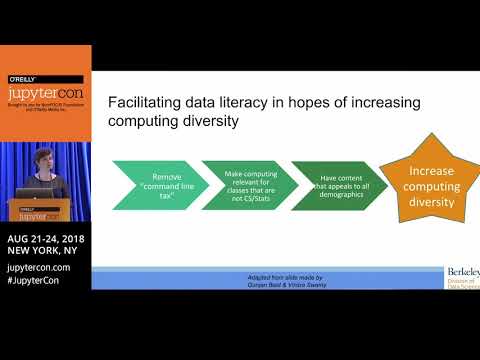
11 — Democratizing Data - Tracy Teal (The Carpentries)
12 — Jupyter & Gravitational Waves - Will Farr (Stony Brook University)
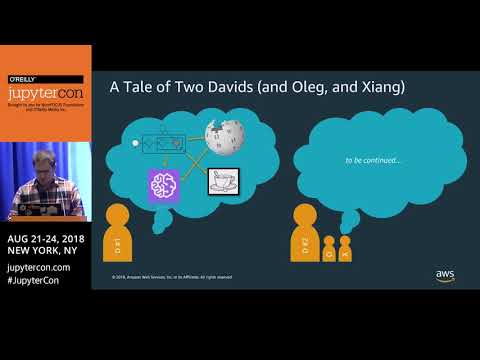
13 — Keynote by Dan Romuald Mbanga (Amazon Web Services)
14 — The Reporter's Notebook - Mark Hansen (Columbia Journalism School)
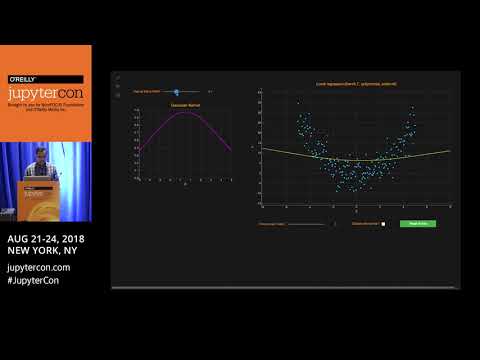
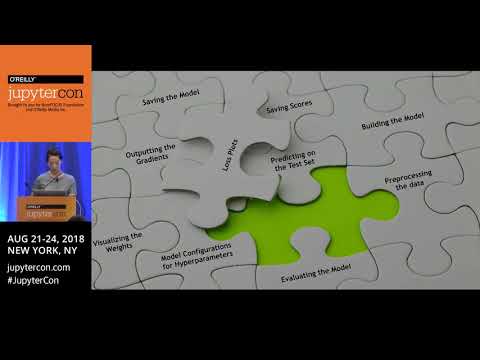
15 — Visualizing machine learning models in the Jupyter Notebook- Chakri Cherukuri (Bloomberg LP)
16 — Data Science as a Catalyst for Scientific Discovery Michelle Gill, Ph.D. (BenevolentAI)
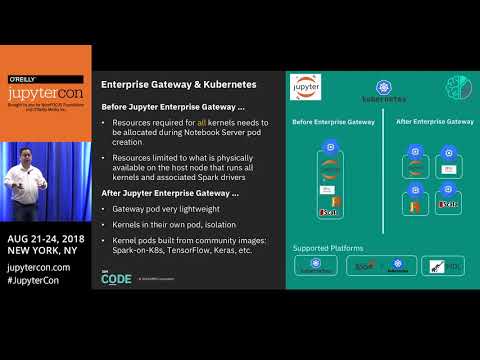
17 — Scaling notebooks for deep learning workloads - Luciano Resende (IBM Watson)
18 — Containerizing notebooks for serverless execution (sponsored by AWS)
19 — Notebooks at Netflix: From analytics to engineering- Michelle Ufford (Netflix)
20 — Enterprise usage of Jupyter: The business case and best practices for leveraging open source
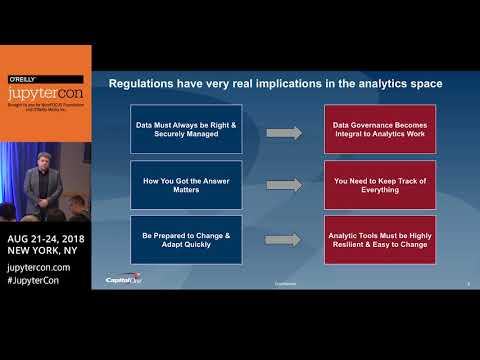
21 — Using Jupyter notebooks in highly regulated environments
22 — Open source software and the allocation of capital- Matt Greenwood (Two Sigma Investments)
23 — Using Jupyter to Empower Enterprise Analysts - Dave Stuart (Department of Defense)
24 — Jupyter, sensitive data, and public policy- Julia Lane
25 — Business Summit roundtable: The current environment
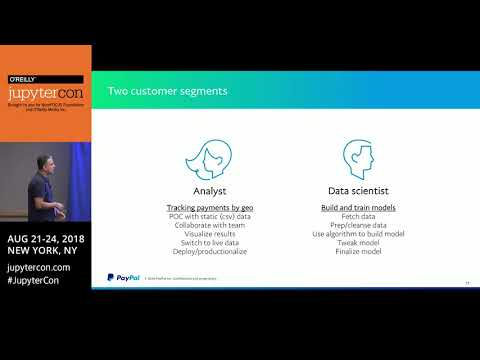
26 — PayPal Notebooks: Data science and machine learning at scale, powered by Jupyter
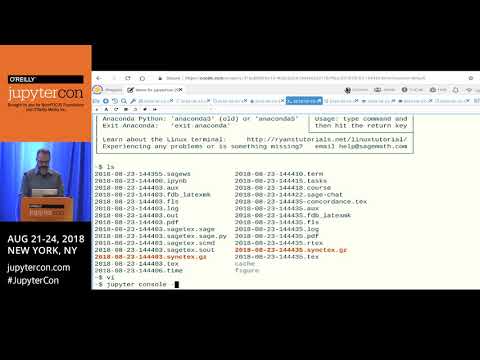
27 — Real-time collaboration with Jupyter notebooks using CoCalc- William Stein (SageMath, Inc)
28 — Data science in US and Canadian higher education- Laura Noren (Obsidian Security)
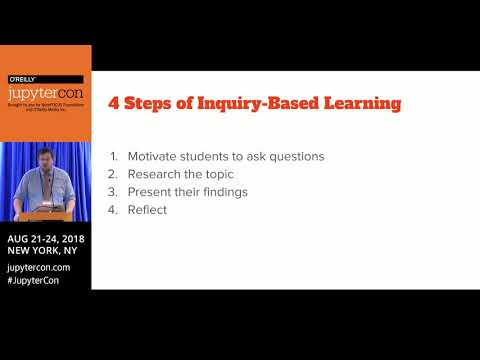
29 — Flipped learning with Jupyter: Experiences, best practices, and supporting research
30 — Making beautiful objects with Jupyter- M Pacer (Netflix)
31 — Jupyter for every high schooler- Rob Newton (Trinity School)
32 — The Jupyter Notebook as a transparent way to document machine learning model development
33 — Current RISE capabilities and its evolution into the future- Damián Avila (Anaconda, Inc.)
34 — Reproducible data dependencies for Jupyter - Jackson Brown, Aneesh Karve
35 — Reproducible education: What teaching can learn from open science practices
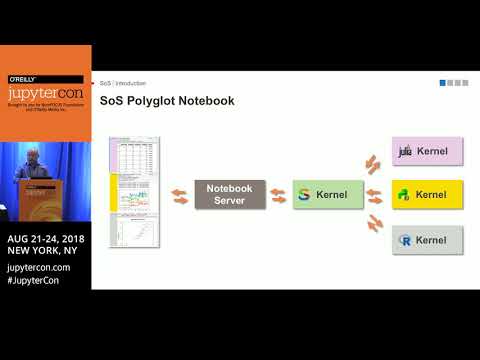
36 — SoS: A polyglot notebook and workflow system...- Bo Peng (The University of Texas)
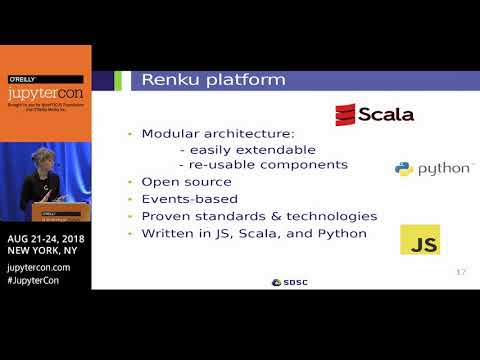
37 — Reproducible science with the Renku platform- Sandra Savchenko-de Jong (Swiss Data Science Center)
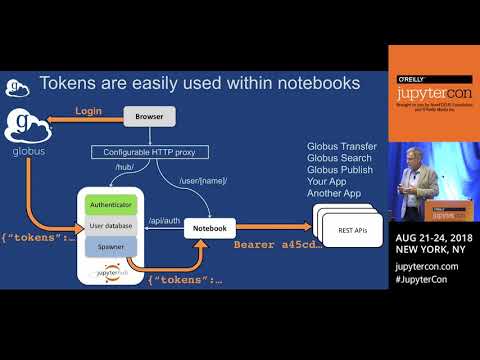
38 — Scaling collaborative data science with Globus and Jupyter - Ian Foster
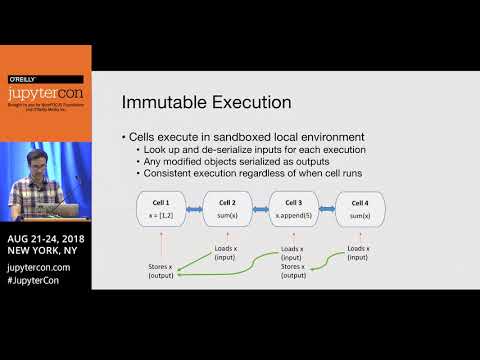
39 — Explorations in reproducible analysis with Nodebook- Kevin Zielnicki (Stitch Fix)
40 — I don't like notebooks.- Joel Grus (Allen Institute for Artificial Intelligence)
41 — Learn by doing: Using data-driven stories and visualizations in the classroom
42 — Binder: Lowering the bar to sharing interactive software- Tim Head (Wild Tree Tech)
43 — Designing for interaction- Scott Sanderson (Quantopian)
44 — What things are correlated with gender diversity: A dig through the ASF and Jupyter projects
45 — nbinteract: Shareable interactive web pages from notebooks
46 — Going native: C++ as a first-class citizen of the Jupyter ecosystem
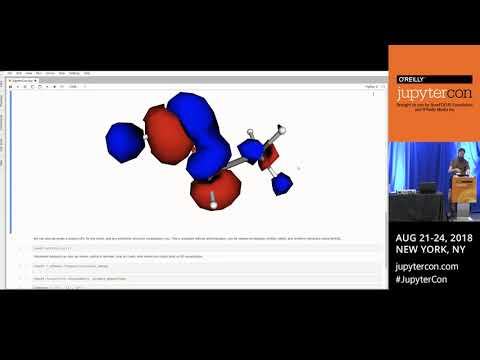
47 — Reproducible quantum chemistry in JupyterLab - Chris Harris (Kitware)
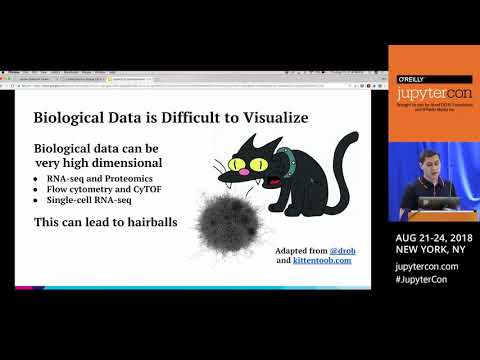
48 — Visualizing high-dimensional biological data with Clustergrammer-Widget in the Jupyter Notebook
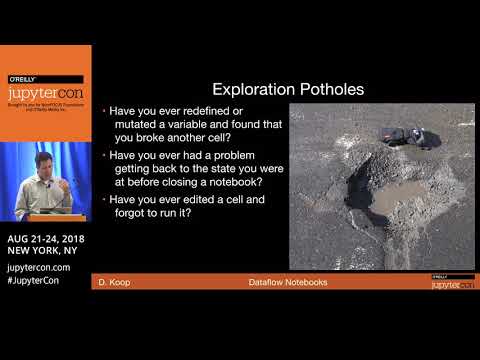
49 — Supporting reproducibility in Jupyter through dataflow notebooks
50 — JupyterLab and Plotly: A data visualization power couple- Lindsay Richman (McKinsey & Co.)
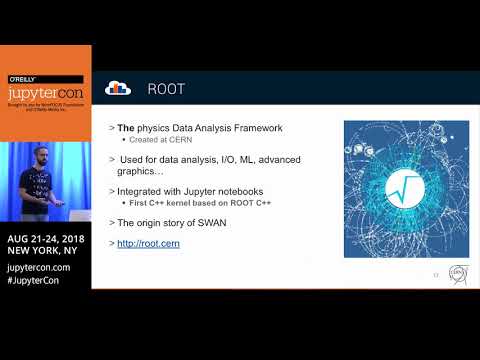
51 — SWAN: CERN's Jupyter-based interactive data analysis service - Diogo Castro (CERN)
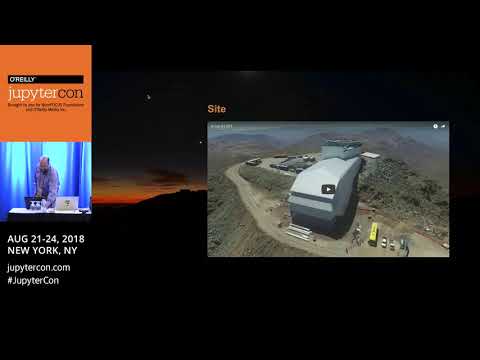
52 — "If the data will not come to the astronomer. . ." - Adam Thornton (LSST)
53 — Terraforming Jupyter: Changing JupyterLab to suit your needs
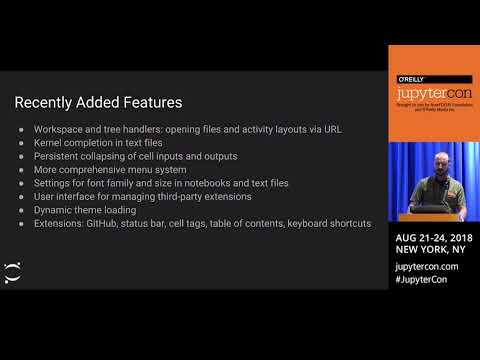
54 — JupyterLab- Ian Rose (UC Berkeley), Chris Colbert (Project Jupyter)
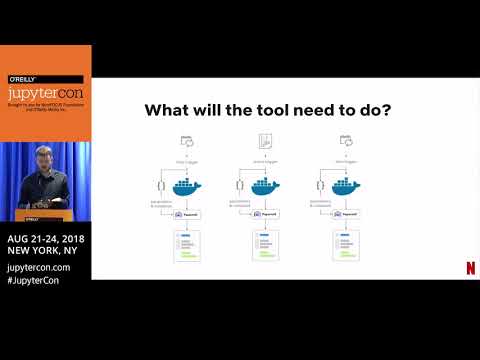
55 — Scheduled notebooks: A means for manageable and traceable code execution- Matthew Seal (Netflix)
56 — Jupyter widgets- Maarten Breddels (Maarten Breddels), Sylvain Corlay (QuantStack)
57 — The reincarnation of a notebook- Tony Fast (Ronin), Nick Bollweg (Georgia Tech Research Institute)
58 — GenePattern Notebook: Jupyter beyond the programmer
59 — Canadians land on Jupyter - Ian Allison, James Colliander
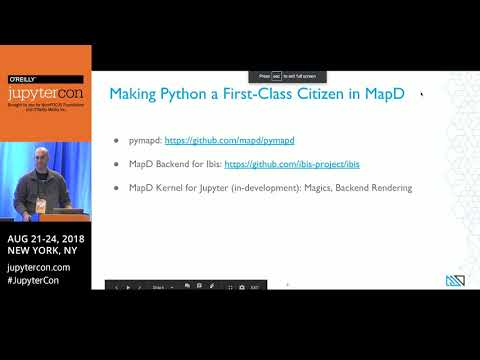
60 — Using the MapD kernel for the Jupyter Notebook- Randy Zwitch (MapD)
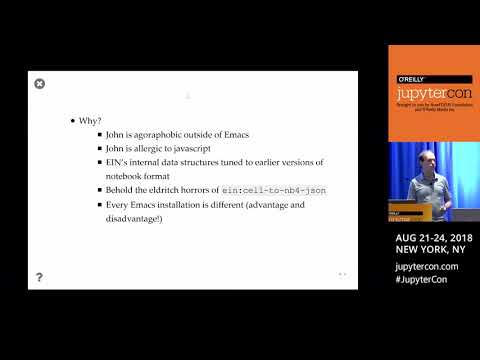
61 — The Emacs Ipython Notebook- John Miller (Honeywell UOP)
62 — Charles Smith (Netflix) interviewed at JupyterCon NY 2018
63 — How JupyterLab and widgets enable interactive analysis of the Earth's past, present, and future
64 — JupyterHub for integrated learning modules - Mariah Rogers, Julian Kudszus (UC Berkeley)
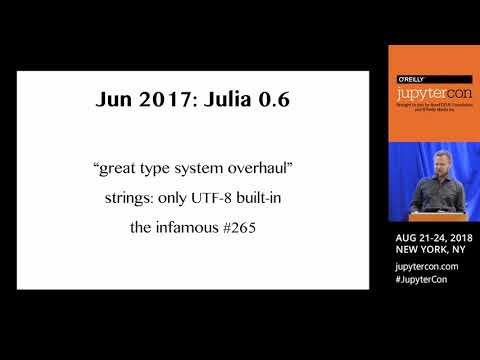
65 — The journey to Julia 1.0: The "Ju" in Jupyter
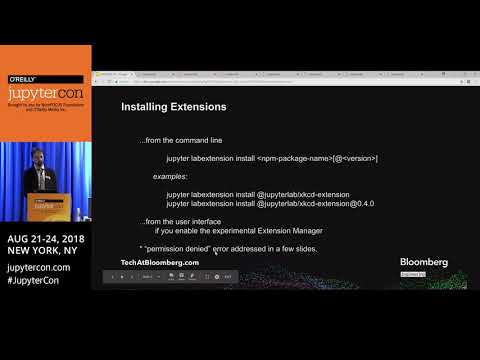
66 — Paul Ivanov (Bloomberg) interviewed at JupyterCon NY 2018
67 — Using JupyterLab for flood map development - Seth Lawler (Dewberry)
68 — Dan Mbanga (AWS) interviewed at JupyterCon NY 2018